


Skip to content

Water points that pay for their own repairs.

The Maji Community Dispenser is a prepaid water tap that runs on solar power. People buy credit on a card and draw exactly what they’ve paid for. The money is collected before the water flows, so there’s a fund for the pump, the pipes and the next repair.

Children at a village standpipe in the Ashanti Region, Ghana, one smiling beside two wall-mounted Maji Community Dispensers
Ashanti Region, GhanaTwo Community Dispensers retrofitted into a village standpipe
Dispensers installed
50+
People using them daily
2,000+
Litres dispensed
200M+

Fleet figures as of August 2026

Why water points fail

A worn valve is cheap to replace. Finding the money to replace it is the hard part.

On most rural and peri-urban water schemes, cash is collected by hand at the tap. Some goes missing, some is lent out, some is never collected at all. When a part wears out there’s nothing in the account, and a water point that cost thousands to build stands idle for want of a small repair.

The dispenser takes the cash box away from the tap. Customers pay in advance through a local reseller, every litre is recorded against a card, and the committee or operator can see the money come in. It won’t stop every kind of misuse, but it closes the easy routes and makes the rest visible.

How it works

Cash to a reseller, credit on a card, water at the tap.

The tap itself never holds cash, and nothing about a sale depends on mobile coverage.
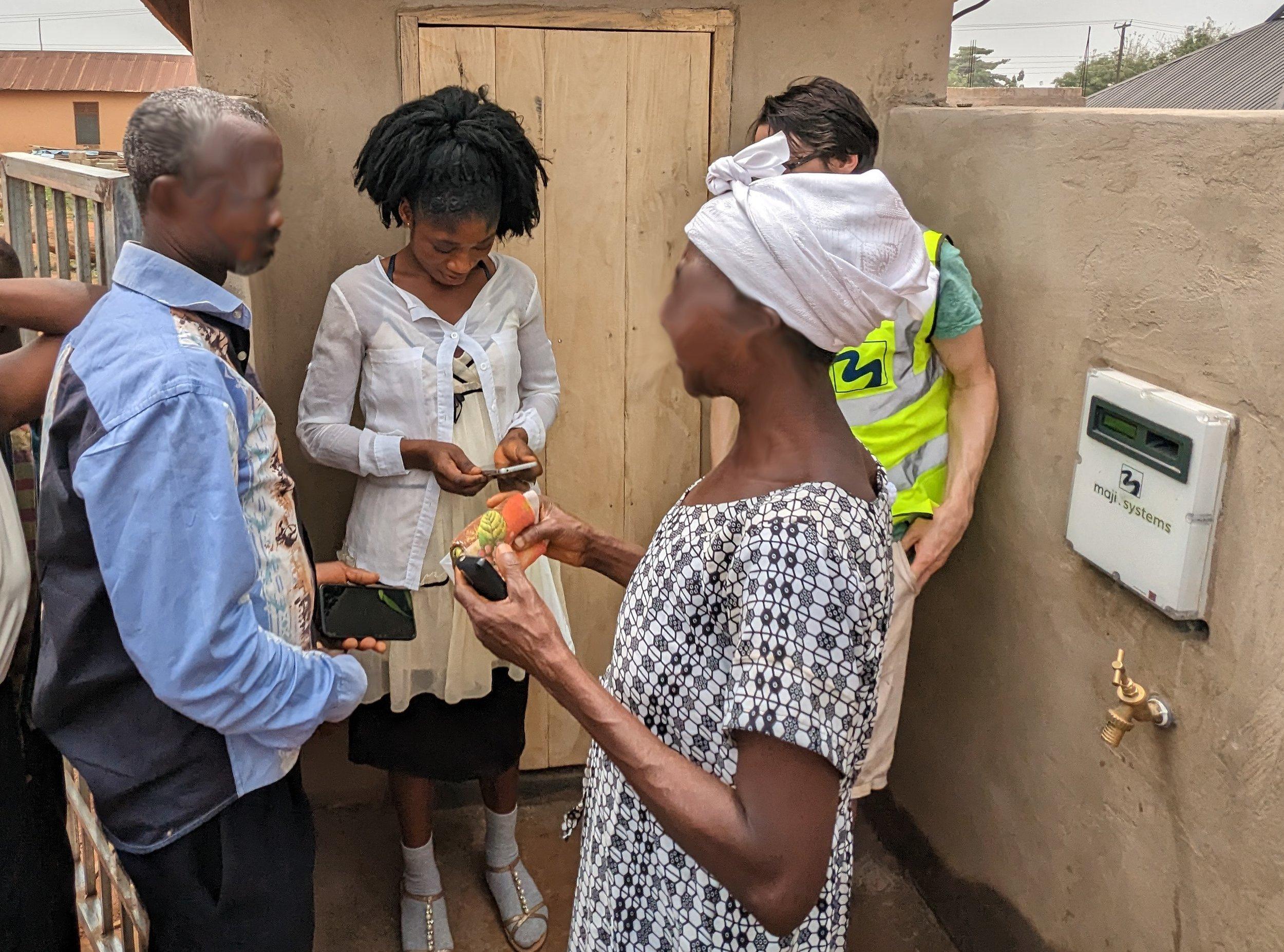
  1. A reseller topping up a customer’s WaterCard on her phone beside a wall-mounted Maji dispenser

    Step 1

    Top up

    A customer pays a local reseller in cash. The reseller taps the customer’s WaterCard to an Android phone running the free Maji app and adds the credit. No signal needed.

  2. A woman filling a yellow jerrycan at a Maji Community Dispenser while children watch

    Step 2

    Draw water

    At the dispenser, the customer presents their card. The valve opens, the flow meter counts, and the cost of each litre comes off the card as the water runs.

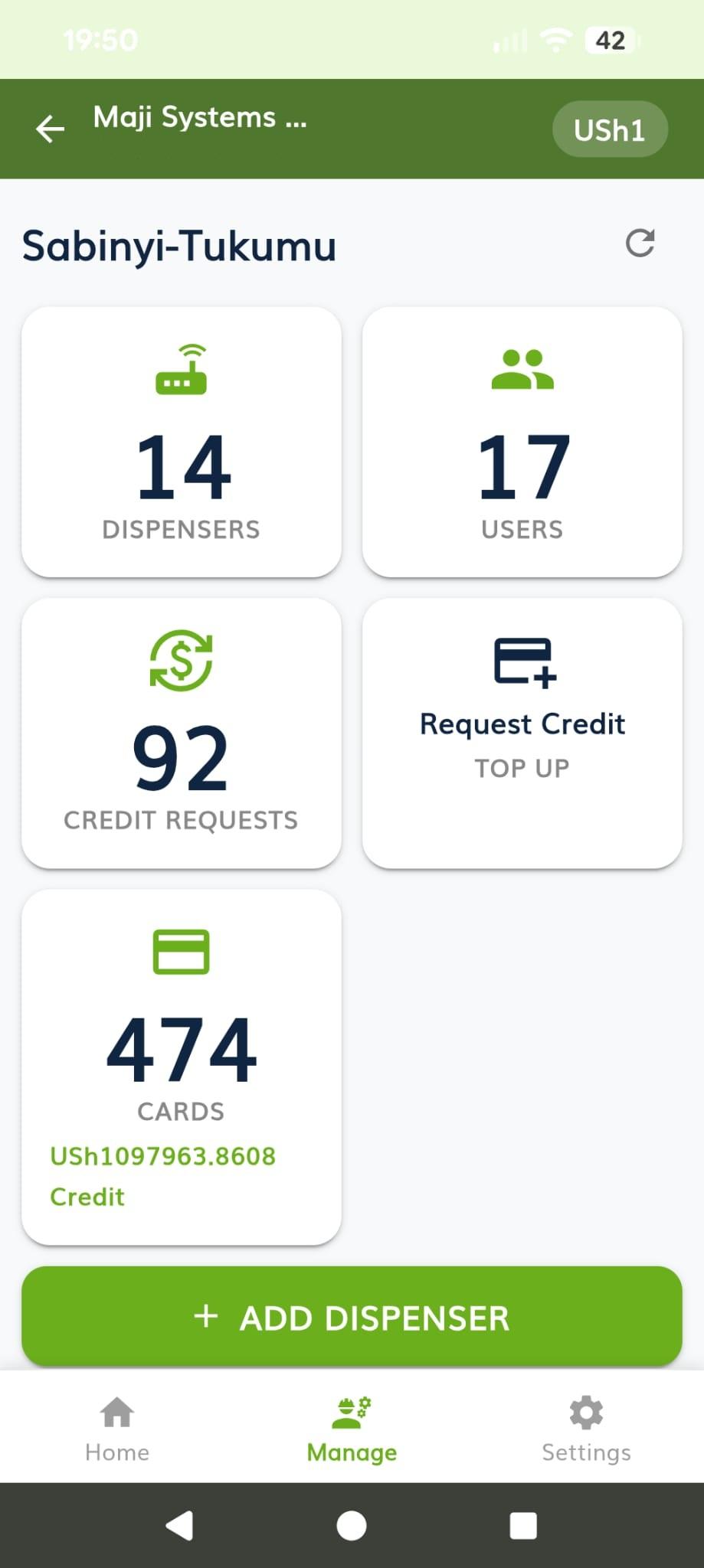
  3. The Maji app’s community overview, counting 14 dispensers, 17 users, 92 credit requests and 474 cards

    Step 3

    Account for it

    Every sale is stored on the dispenser and sent to the cloud whenever there is signal. Managers see sales, reseller balances and maintenance reports for each tap.

The hardware

A card reader, meter and valve in one box.

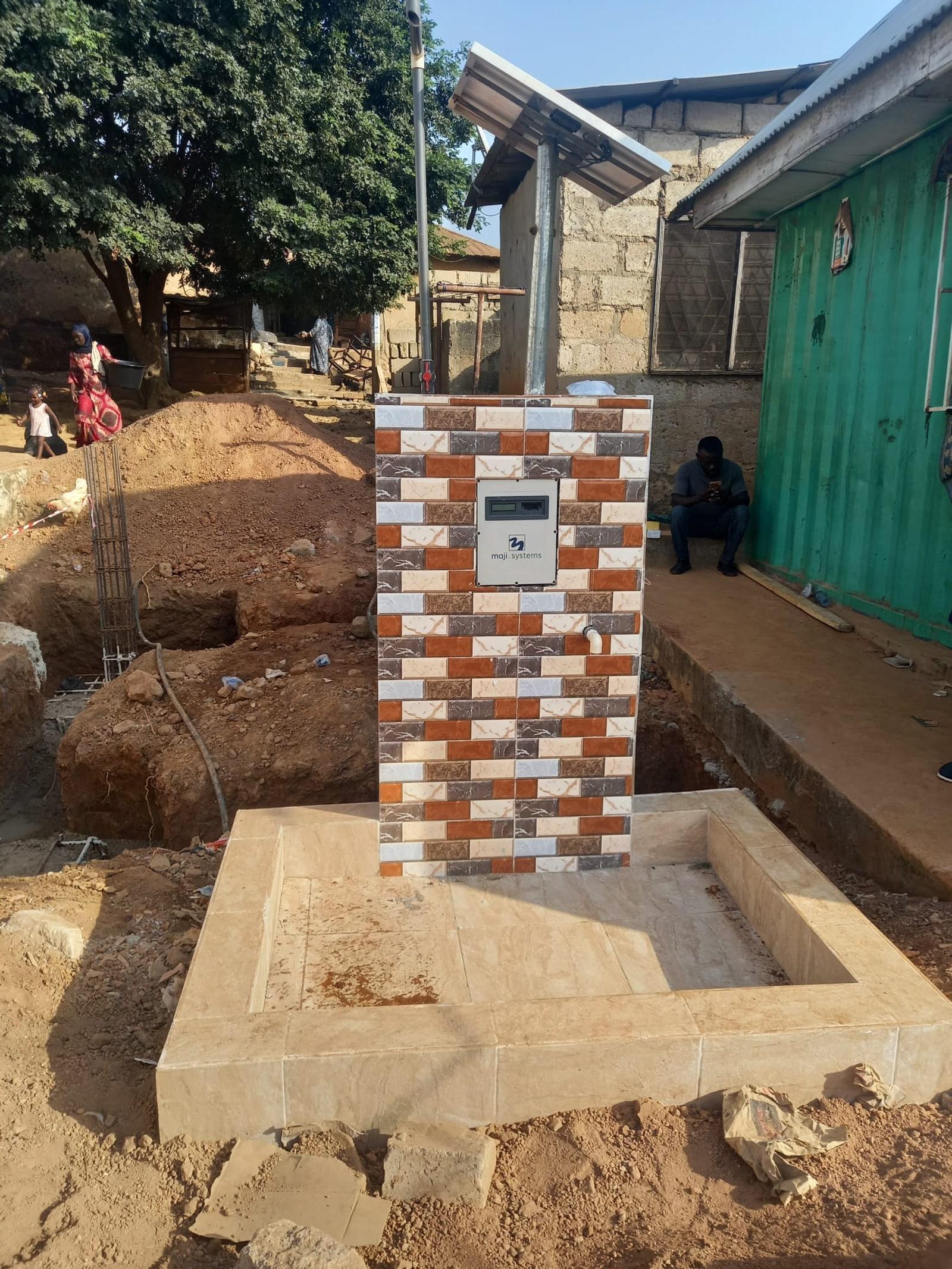
It mounts on an existing standpipe or sits flush in a kiosk wall, and the enclosure is rated IP66 against dust and water.

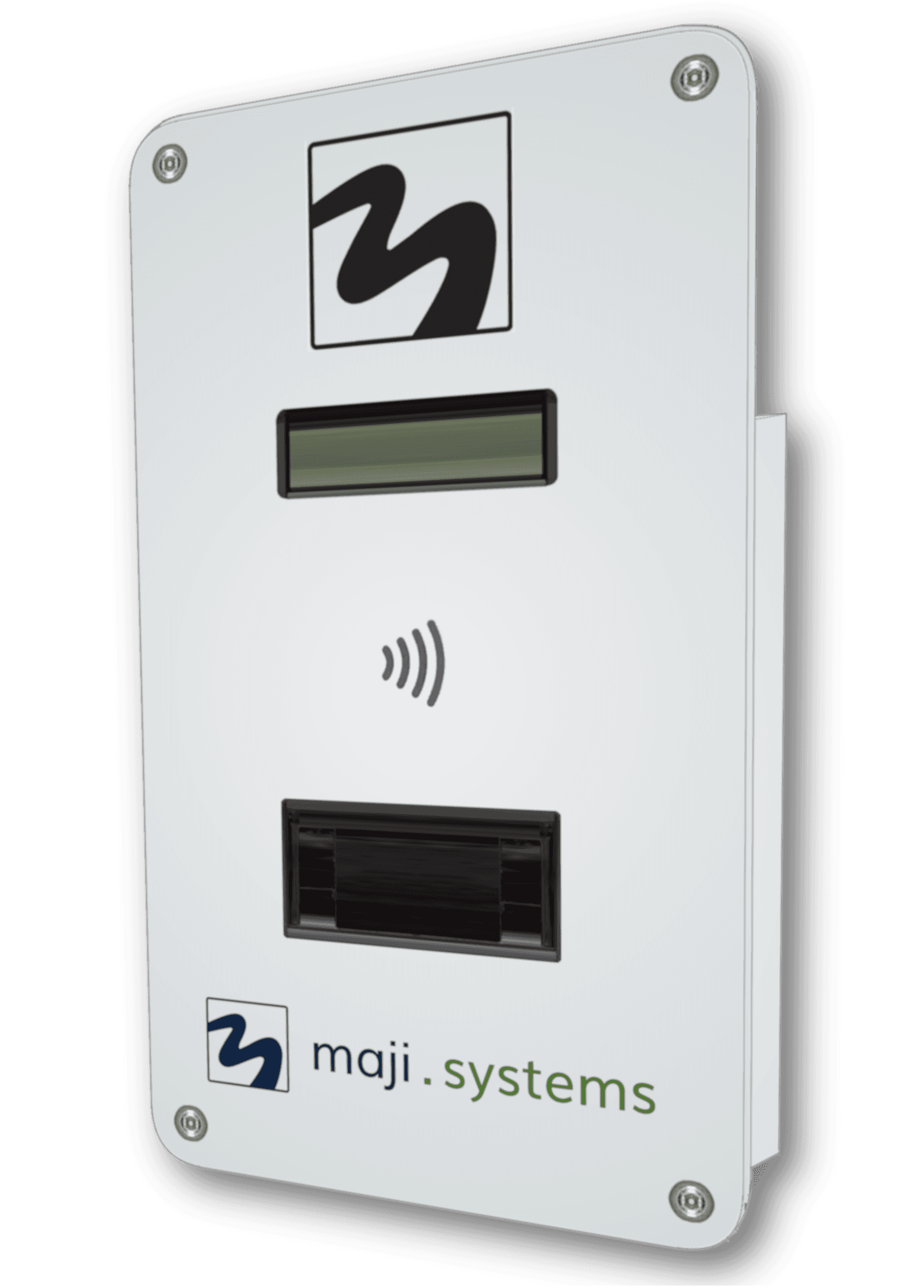
The Maji Community Dispenser faceplate, with its display, card slot and Maji logo
Payment
MIFARE DESFire NFC cards with AES-encrypted data. The cards can’t be cloned, and compatible cards can be bought locally.
Offline
The balance lives on the card, so people can buy water with no mobile signal at all. Sales are kept on an SD card and uploaded later.
Power
A built-in 12 V, 14 Ah lithium battery charged by a 50 W+ solar panel. It takes 12 V DC mains where there is some, but doesn’t need it.
Upkeep
The valve and flow meter are the wearing parts, due every two years or 100,000 cycles. A local technician can swap them.

In the field

Where it’s running now.

A Maji Systems team member handing a prepaid WaterCard to a resident in the Ashanti Region, Ghana

Ashanti Region, Ghana

24-hour water for 2,000 residents in the Ashanti Region

Community Dispensers were fitted into existing village standpipes in the Ashanti Region. Prepaid WaterCards replaced informal cash collection, and the village water committee now has a record of every sale.

Read the case study

Tell us about your water points.

How many sites, what feeds them, and how payment is collected today. We will tell you whether the dispenser is a good fit and what it would cost.